Geometric Tattoos
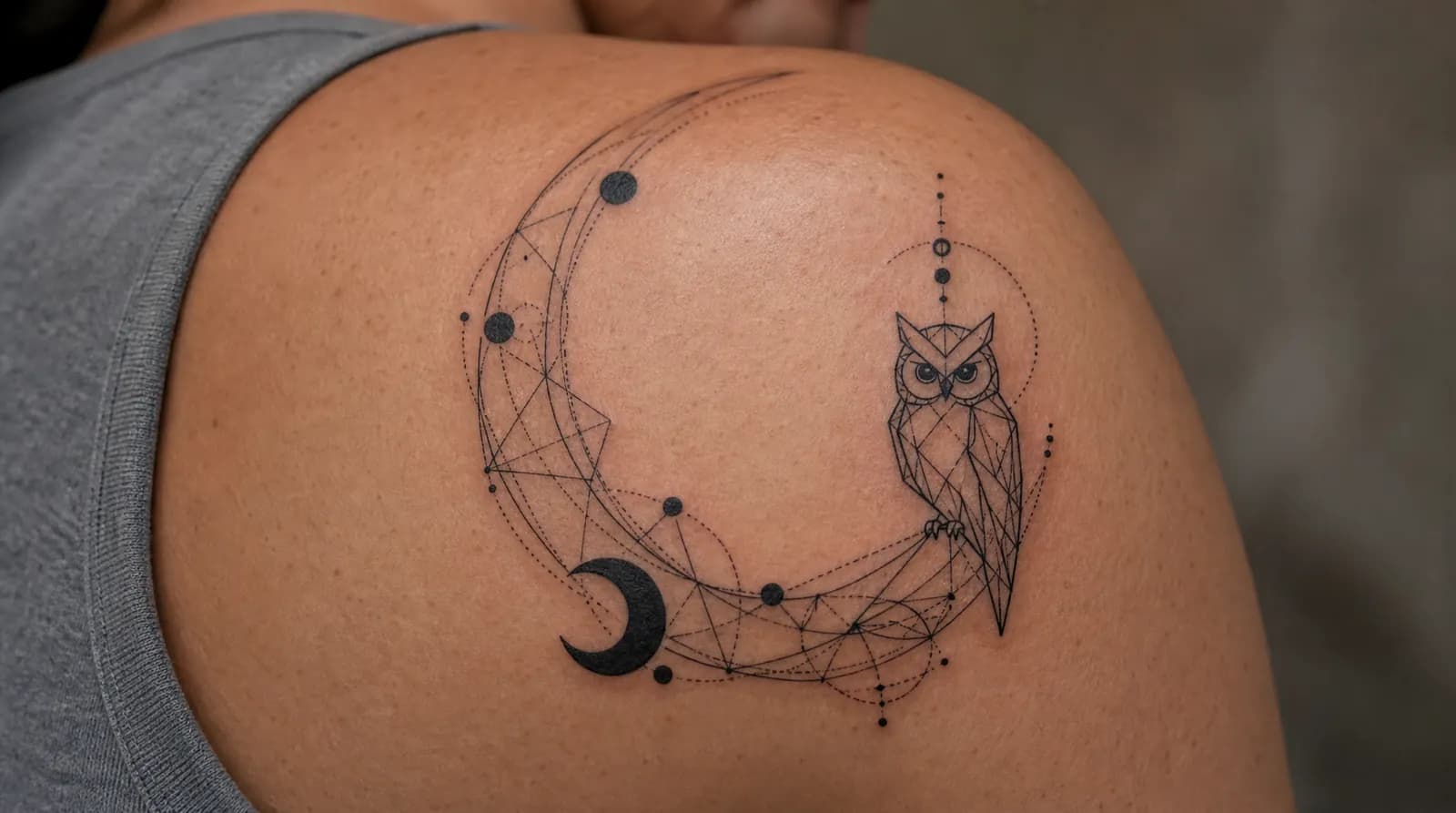
Geometric tattoos build images out of clean shapes, symmetry and repetition - triangles, circles, sacred-geometry patterns and dotwork gradients. The appeal is precision: everything lines up, and the eye follows the structure.
Very old patterns, very new technique
The shapes in geometric tattooing long predate tattooing as we know it. The Flower of Life - that interlocking grid of overlapping circles you've seen on a hundred forearms - appears carved into stone at the Temple of Osiris at Abydos in Egypt. Mandalas, from the Sanskrit for "circle," have structured Hindu and Buddhist practice for centuries as objects of meditation.
What's new is the ability to put them on skin this cleanly. Modern geometric work rose alongside the blackwork and dotwork revival, borrowing stippling - building tone from thousands of individual dots - from engraving and etching traditions.
So the style sits in an unusual place: ancient symbolic vocabulary, executed with a precision that would have been impossible for most of tattooing's history.
Precision is the whole promise
Geometry leans on order, and order is unforgiving. Straight lines have to stay straight, circles have to close cleanly, and symmetry has to genuinely resolve. There is no such thing as approximately symmetrical - the eye finds the error immediately, which is exactly why the style looks so deliberate when it's right.
It's also the style where the artist's hand matters most visibly. A wobble that would vanish inside a realism piece or read as character in traditional work is simply a mistake here. Look hard at an artist's healed geometric work before booking, not just the fresh photos.
The upside of all that structure is that it blends beautifully. A geometric frame around a realistic animal, or dotwork shading inside a mandala, are among the most reliable ways to combine precision with softness.
Placement that follows the body
Geometric pieces look best where the body offers a clean axis to align to - the forearm, the outer upper arm, the spine, the shin. The design needs something to be straight relative to, and the body has to cooperate.
Symmetrical mandalas want a centre point: the shoulder, the chest, the back of the hand, the sternum. Placed off-centre on a curve, a mandala reads as skewed no matter how perfectly it was drawn, because the body itself is distorting it.
For ageing, the same advice as fine line work applies - a little weight in the lines and real space between elements. Dense dotwork in particular can close up over years, turning a graduated shade into a flat grey patch, so let it breathe.
Describing a geometric design to AI
This is the one style where generated designs need the most scrutiny, and it's worth knowing why before you start. Symmetry is a known weakness of image models - they produce shapes that look symmetrical at a glance and fall apart when you actually compare the halves.
- Name the structure: "a symmetrical geometric wolf built from triangles and thin lines."
- Ask for the technique: "geometric, precise line work, dotwork shading, symmetrical."
- Mention alignment - "centred mandala" or "vertical design along the forearm" helps the model place the symmetry.
- Combine thoughtfully: one realistic subject inside a geometric frame beats stacking three patterns together.
- Check the result properly. Mirror it, or fold the image in half in your head - count the segments on each side. Generated mandalas frequently have a different number of petals left and right.
Geometric tattoos - FAQ
- What do geometric tattoos symbolize?
- It depends on the shapes. Sacred-geometry patterns like the Flower of Life carry ideas of balance, unity and connection, and mandalas function traditionally as meditative objects representing wholeness. Personal geometric designs often stand for order and structure, or simply render a meaningful subject in a modern way.
- Do geometric tattoos need to be perfectly symmetrical?
- The style depends on it, which is why placement and a steady hand matter more here than almost anywhere else. Generating the design first lets you check symmetry and proportion before anything is permanent - and it's worth checking carefully, because near-symmetry is the most common flaw in generated geometric work.
- Do dotwork tattoos take longer?
- Yes, often considerably. Shading built from individual dots is slow, methodical work, and a large dotwork mandala can run several sessions. It's also physically demanding for the artist, so expect the pricing and scheduling to reflect that.
- How do geometric tattoos age?
- Well, when they're given room. The risk is density - tightly packed lines and fine dotwork gradually close up as ink spreads, and a subtle gradient can flatten into a solid patch. Slightly bolder lines and generous spacing keep the structure readable for far longer.
- Can geometric be combined with other styles?
- It's one of the most combinable styles there is. Geometric frames around black and grey realism subjects are extremely common, as is dotwork shading inside otherwise linear designs. The usual rule applies: one focal subject plus geometric structure works; three competing patterns don't.
Related styles
Design a geometric tattoo now.
Describe your idea and get a clean, ready-to-ink design in seconds.
Start designing