Fine Line Tattoos
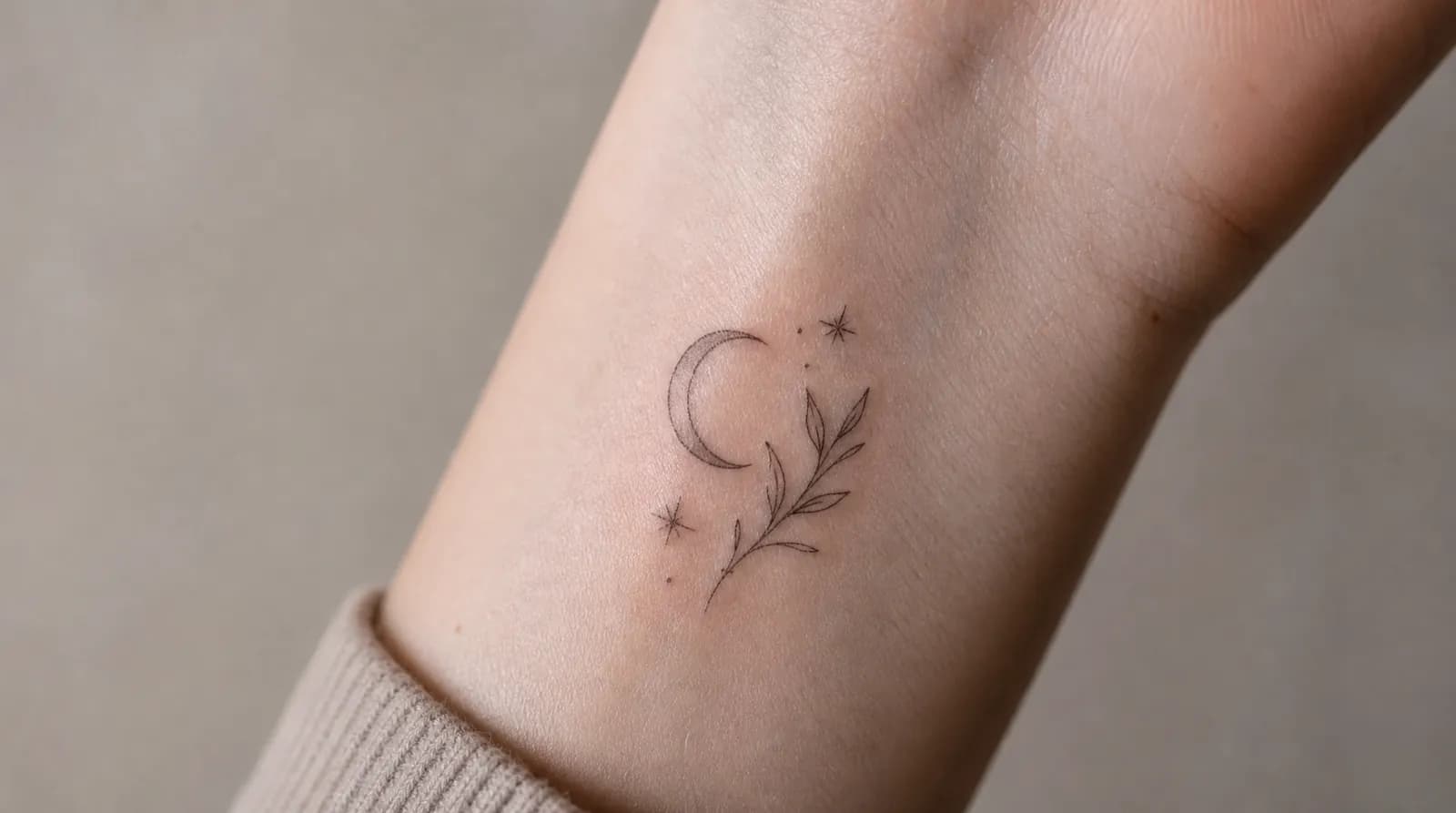
Fine line is the thin, single-needle style behind most of today's small, delicate tattoos - a single crisp outline instead of bold black filling. It looks effortless, which is the whole trick: there is nowhere for a mistake to hide.
A style that came from the opposite of delicate
Fine line reads as gentle and modern, so it surprises people to learn where the technique comes from. Its direct ancestor is the single-needle work that came out of Chicano tattooing in East Los Angeles - much of it developed in prisons, where machines were improvised and a single sewing needle was what you had.
That constraint produced something nobody expected: astonishing softness. Artists working with one needle and diluted black ink found they could render detail no bold-line machine could touch. By the 1970s the technique had moved from the yard into street shops, and the same lineage runs straight through to black and grey realism - two very different-looking styles, one shared origin.
What changed recently is the audience. Small, discreet, photograph-beautifully-on-a-wrist work turned out to be exactly what a generation discovering tattoos through their phones wanted. Fine line became the default first tattoo almost by accident.
What you're actually looking at
One needle, or a tight three-round grouping. One consistent, hair-thin line. Little or no solid black, and shading used sparingly if at all. The result sits closer to a pen-and-ink drawing than to what most people picture when they hear "tattoo."
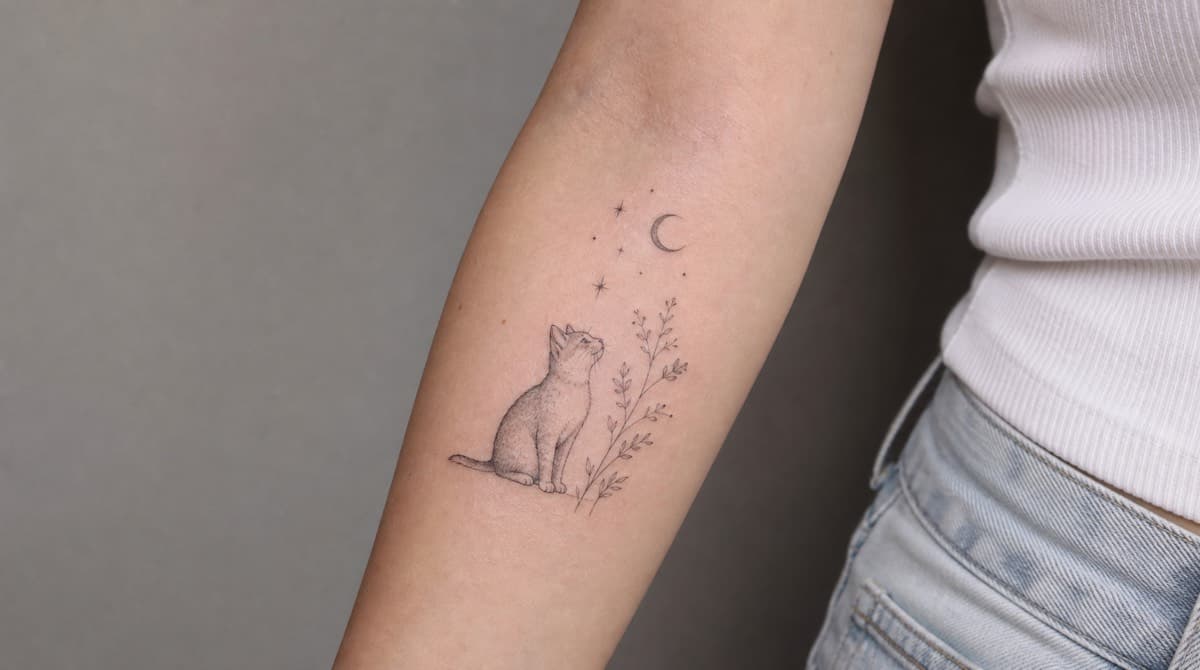
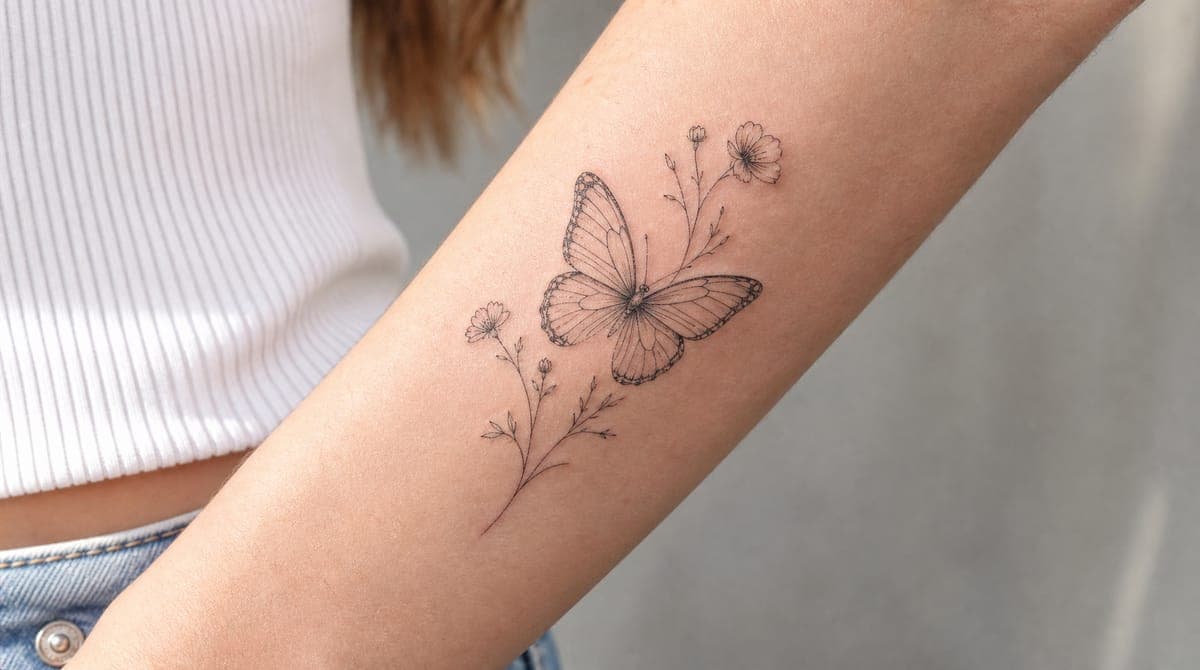
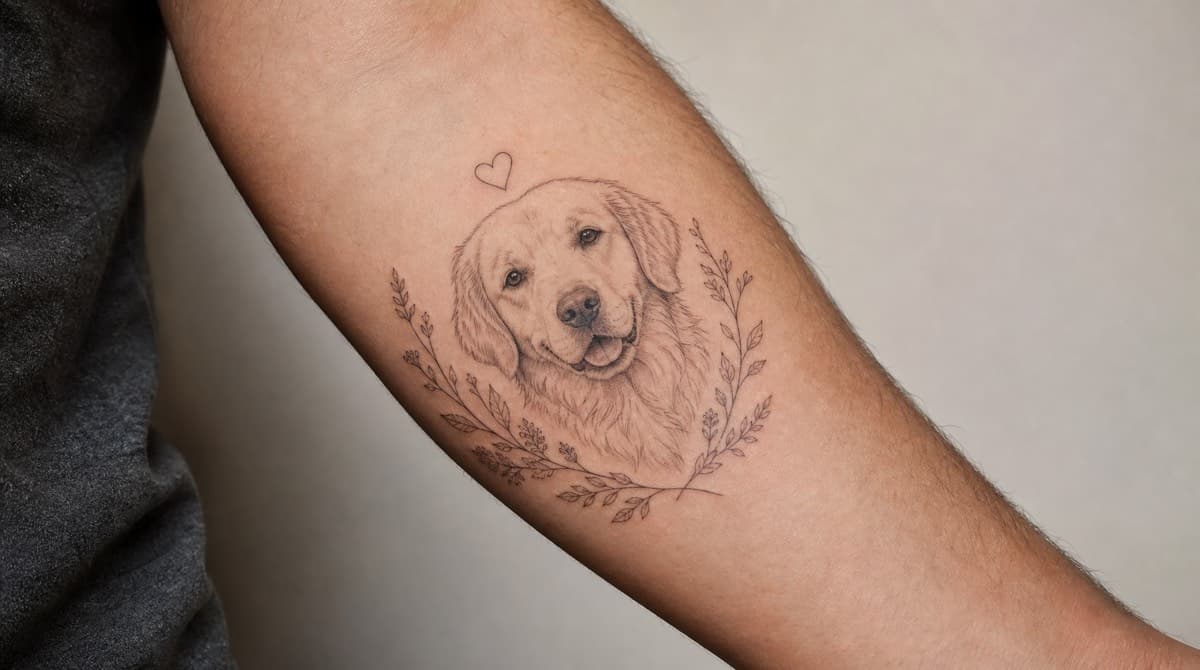
Because the entire design rests on that one line, composition carries everything. There's no colour to create a focal point and no black fill to anchor the shape - so botanical sprigs, script, small animals, constellations and single-stem flowers dominate the style. They're subjects that stay legible when reduced to outline.
The honest conversation about longevity
Here is the part good artists will raise with you and marketing photos won't: fine line is the least durable style in common use. A fresh fine line piece and the same piece at ten years are meaningfully different objects.
The reason is simple physics. A thin line holds less ink, and all tattoo ink spreads slowly through skin for as long as you have it. Bold work has enough ink that spread barely registers. A hair-thin line has margin for nothing - it softens, thickens slightly, and if neighbouring lines were close together they drift toward each other until they read as one.
This isn't a reason to avoid the style. It's a reason to design for it: slightly more line weight than looks necessary, noticeably more space between elements than feels right on screen, and a healthy scepticism about any detail smaller than a grain of rice.
Where it holds up, and where it struggles
Placement does more for fine line longevity than aftercare ever will. Forearm, outer bicep, calf and shoulder are the friendly territory - relatively stable skin, low friction, easy to keep out of direct sun.
Fingers, feet, inner wrist and ribs are where fine line ages hardest. Hands and feet regenerate quickly and take constant abrasion; ribs stretch and move. Plenty of people get fine line work there anyway and love it, but go in expecting touch-ups rather than being disappointed by them.
Sun is the other variable and the one you control. Sun exposure breaks down tattoo ink, and thin work has the least to lose.
How to get a good fine line design from the generator
The model responds to specifics. "A flower" gets you the average of every flower. Naming the subject, the composition and the technique gets you a design.
- Name the subject and any secondary elements: "a single long-stem rose with two leaves and a small crescent moon above."
- Ask for the technique directly: "fine line, single-needle, thin clean linework, minimal shading."
- Say where it goes - placement changes proportion. "Vertical composition for a forearm" reads very differently from "small, for the inner wrist."
- Keep it uncluttered. Two or three elements almost always beat a busy scene at this scale.
- Generate a few, then shrink one to real size and squint at it. If it turns to mush, it's too detailed - the full prompting walkthrough covers this test properly.
Fine Line tattoos - FAQ
- Do fine line tattoos fade faster?
- They soften faster, which reads as fading. Thin single-needle lines hold less ink, so they spread and lose crispness sooner than bold work - most noticeably on fingers, feet and sun-exposed skin. Slightly thicker lines, sensible placement and sunscreen make a genuine difference.
- Are fine line tattoos good for a first tattoo?
- Yes, and it's the most common first choice for good reason - small, subtle and easy to place discreetly. Generate a few options first so you walk into the studio with a clear reference rather than a vague description.
- Do fine line tattoos hurt less?
- Usually a bit, but not because the needle is gentler. A single needle covers less ground per pass, so there's less trauma at any one moment, and fine line pieces are typically small enough to finish quickly. Placement affects pain far more than style does - ribs and feet hurt regardless.
- How often will a fine line tattoo need touching up?
- It depends almost entirely on placement. Well-placed work on a forearm or shoulder may never need one. Fingers, hands and feet often want a touch-up within a few years. Ask your artist what they'd expect for the spot you've picked - most build a touch-up policy into their pricing.
- What's the difference between fine line and minimalist tattoos?
- Fine line describes the technique - how thin the needle and line are. Minimalist describes the design philosophy - how little is in it. Most minimalist tattoos are done fine line, but you can have an intricate fine line piece that's the opposite of minimalist.
Related styles
Design a fine line tattoo now.
Describe your idea and get a clean, ready-to-ink design in seconds.
Start designing