American Traditional Tattoos
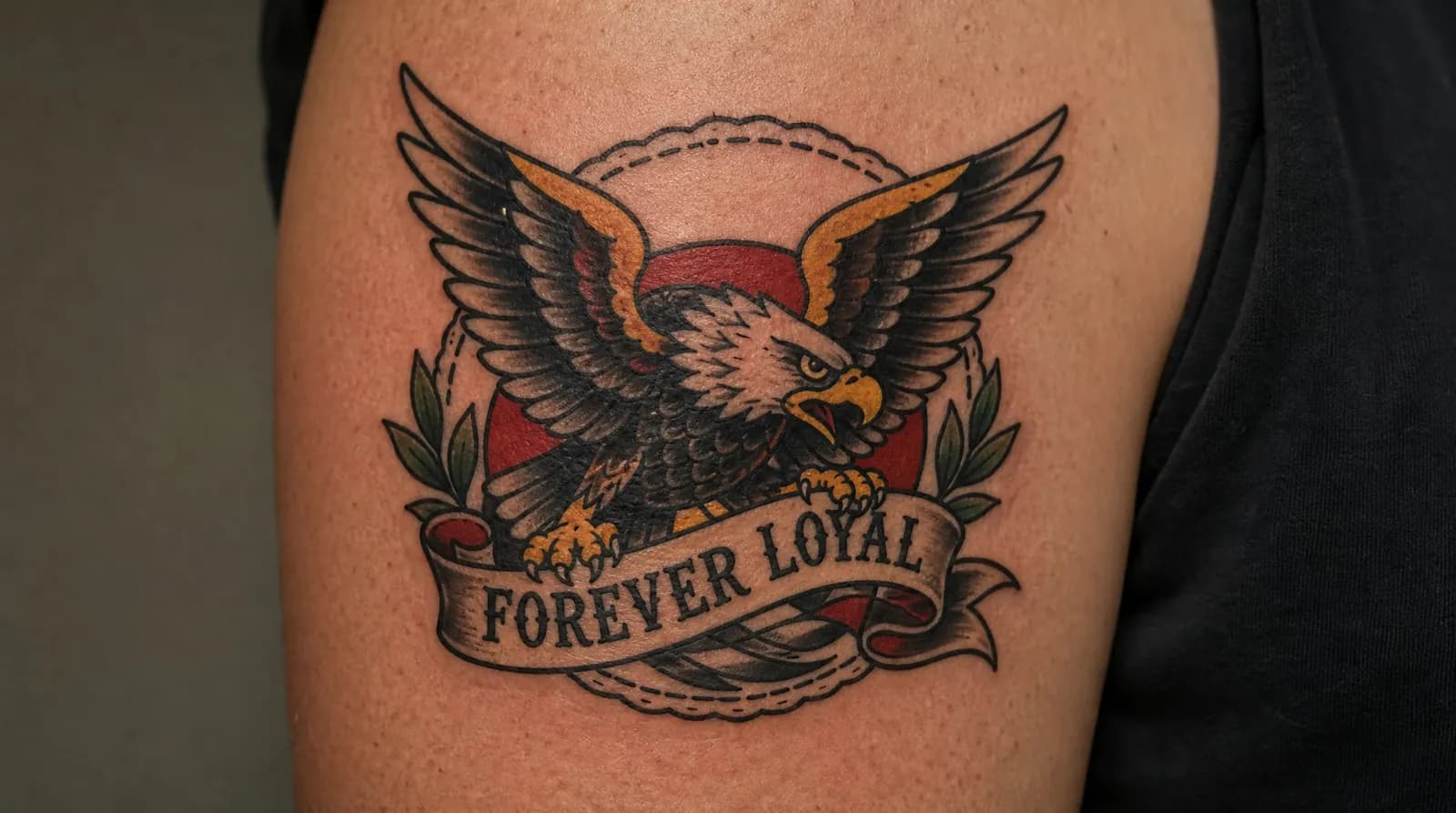
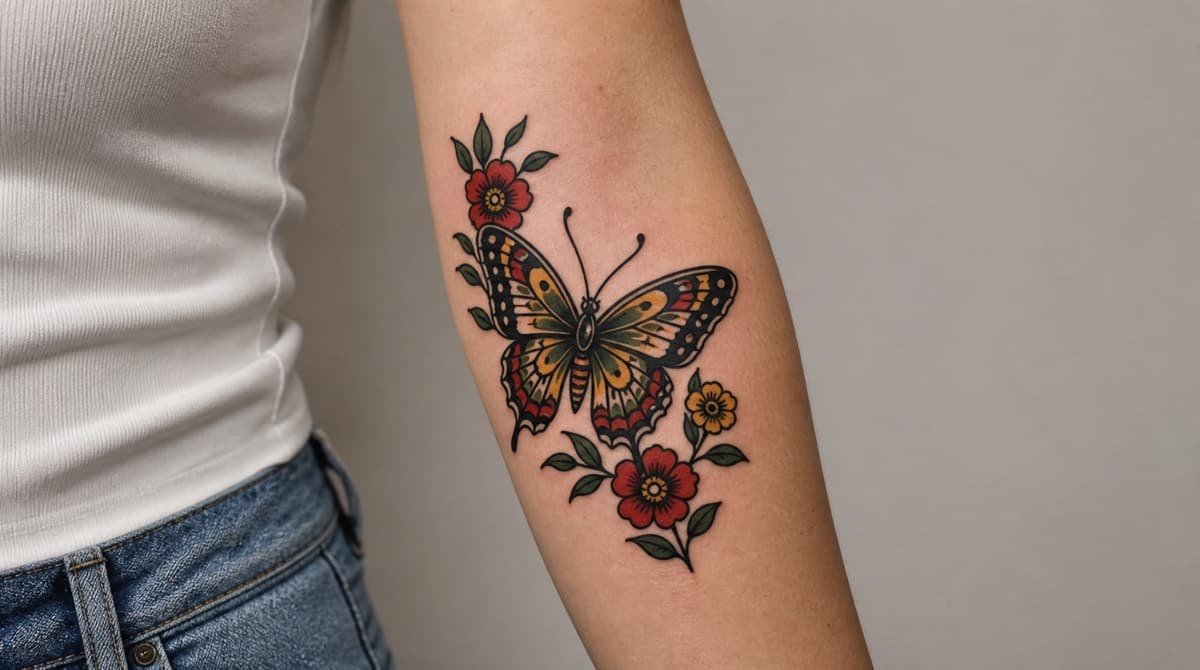
American traditional is the classic tattoo look: heavy black outlines, a tight palette of red, green, yellow and blue, and time-honoured motifs like anchors, roses, eagles, panthers and swallows. It has aged better on skin than any other style for a century - and that is not an accident.
A style built in a port town, at speed
Picture Hotel Street in Honolulu's Chinatown during the Second World War: sailors on shore leave, a few hours of liberty, money in their pockets and a queue outside every tattoo shop.
That's the environment that produced American traditional, and its most famous practitioner, Norman Keith Collins - Sailor Jerry. The constraints were brutal and they shaped everything. Designs had to be applied fast, they had to look good on the arm of someone who might not sit still, and they had to survive years of sun, salt water and manual work. Bold outlines, flat colour and simple iconic shapes weren't an aesthetic choice first. They were the solution.
Collins was also a serious craftsman - he corresponded with Japanese tattoo masters and brought their sense of composition into Western work, mixed his own pigments, and pushed hard on sterilisation long before the industry took it seriously. When he died in 1973 his legacy passed to artists including Ed Hardy and Mike Malone, which is a large part of why the style survived intact rather than becoming a period curiosity.
The motifs were a language
Traditional flash wasn't a catalogue of pretty pictures. For sailors it was closer to a uniform - a record of where you'd been and what you'd survived, readable by anyone else who knew the code.
- Swallow - traditionally marked 5,000 nautical miles at sea. Also the bird that always finds its way home.
- Anchor - stability, and a mark associated with having crossed the Atlantic or served in the merchant marine.
- Fully rigged ship - you had rounded Cape Horn, the hardest passage there was.
- Rose - a sweetheart waiting somewhere, and one of the few softnesses permitted in the vocabulary.
- Panther - strength and ferocity, usually shown mid-crawl with claws out.
- "HOLD FAST" across the knuckles - a reminder to grip the rigging and not fall.
Why it still looks sharp after forty years
Every technical decision in the style compounds in its favour over time. Heavy outlines contain enough ink that the slow spread that softens delicate work barely registers - the line just stays a line. Solid colour fills hold their shape rather than fading unevenly. There are no gradients to go muddy and no hair-thin detail to close up.
You can test this claim in a way you can't with most styles: go and look at forty-year-old traditional tattoos. They read clearly. Then look at forty-year-old fine detail work, and you'll understand exactly why the old tattooers designed the way they did.
The limited palette does similar work. Fewer, flatter colours mean fewer ways for a piece to go wrong as pigments age at different rates - a lesson later styles had to relearn.
Who it suits
Anyone whose priority is a tattoo that still looks like itself in twenty years, and who likes work that reads instantly from across a room. Subtlety is not what this style is for.
It's also unusually flexible on scale. A single rose on the forearm, an eagle across the chest, a small swallow on the hand - the visual language works at almost any size, which is why traditional flash mixes so naturally into a full sleeve built over years.
And if you're weighing it against fine line, that's really a question about what you want from the tattoo in a decade. Both are legitimate answers. They're just different bets.
Designing a traditional piece with AI
- Pick a classic subject: "a traditional rose," "an eagle with spread wings," "an anchor with a banner."
- Ask for the style by name: "American traditional, bold black outlines, limited classic colour palette."
- Keep the colour count low. Traditional strength comes from a few flat colours, not a full spectrum - say so, or the model will happily add more.
- Add a banner with a word or name for the full classic feel, then proofread every letter. Generated lettering is unreliable and a banner puts it front and centre.
- Ask for flat fills explicitly. Models often drift toward soft shading, which is precisely what this style doesn't do.
American Traditional tattoos - FAQ
- Why do American traditional tattoos age so well?
- Bold outlines and solid colour fills. There's enough ink and contrast in the design that it holds its shape as skin changes, with no gradients to muddy and no fine detail to close up. The style was developed under conditions that demanded durability, and it shows.
- Can American traditional tattoos be small?
- Yes. Classic small flash - a swallow, a heart, a small rose or dagger - is a core part of the tradition and works well on hands, forearms and ankles. The bold line weight is what makes small traditional pieces hold up where small detailed pieces don't.
- What's the difference between American traditional and neo-traditional?
- Neo-traditional keeps the bold outlines and strong shapes but opens up the palette, adds more shading and detail, and takes more liberties with subject matter. Traditional is deliberately constrained; neo-traditional treats those constraints as a starting point rather than a rule.
- Do traditional tattoos hurt more because of the solid colour?
- Solid fill means more passes over the same skin, so a heavily filled area can feel more intense than linework alone. That said, placement dominates - a filled forearm piece is generally easier going than fine linework on the ribs.
- Is it disrespectful to get traditional sailor tattoos if I'm not a sailor?
- It's very widely accepted - traditional flash has been worn by non-sailors for the better part of a century and the style is understood as an open tradition. Knowing what your motifs originally meant is simply part of wearing them well, and most traditional artists enjoy being asked.
Related styles
Design a american traditional tattoo now.
Describe your idea and get a clean, ready-to-ink design in seconds.
Start designing